Time Champ > Blog > How to Create and Manage an Effective Project Timeline (2026) > Content
How to Create and Manage an Effective Project Timeline (2026)
Understand project timelines, key components, examples, benefits, and step-by-step methods to create, manage, and optimize schedules.
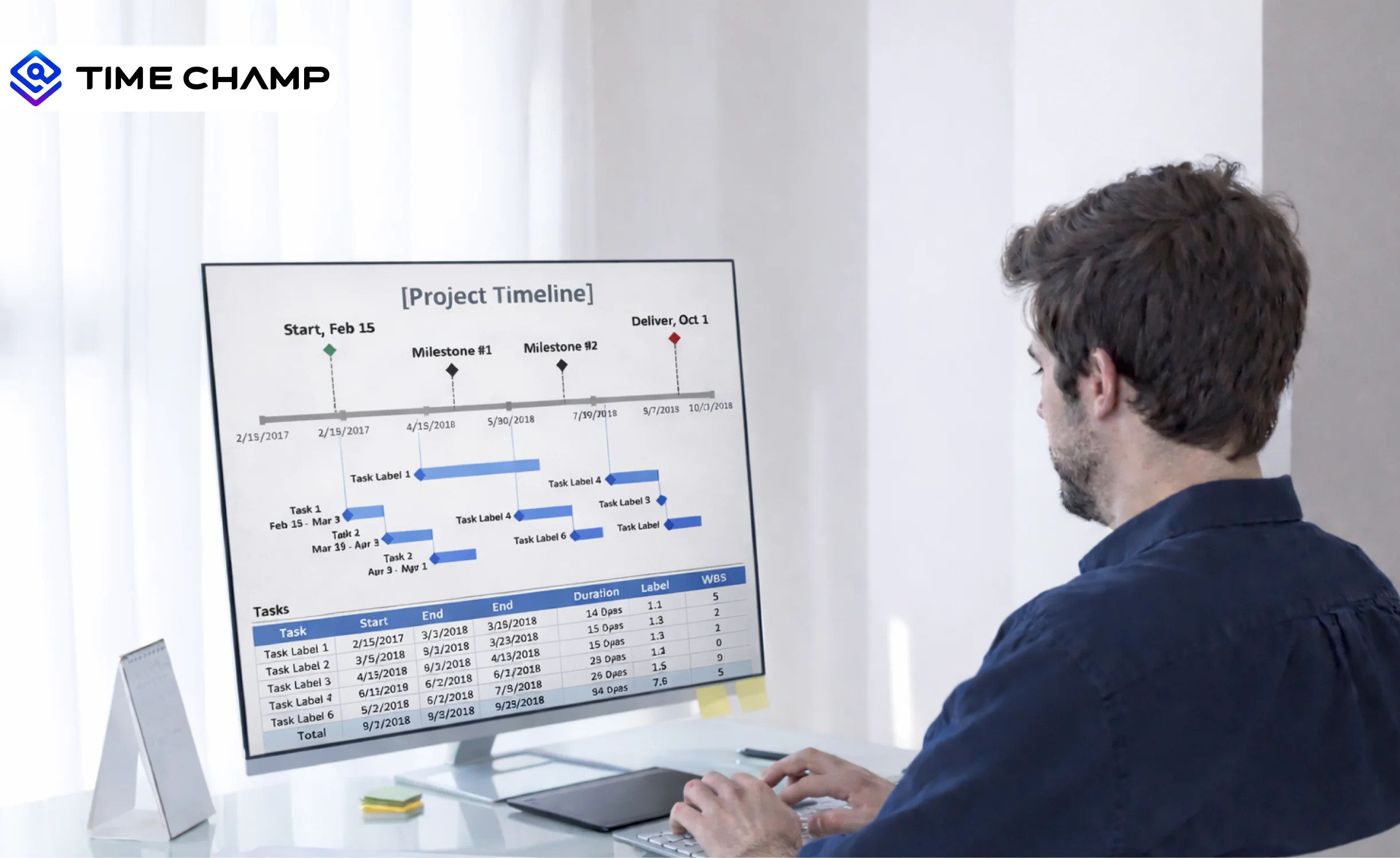
Managing projects without a clear project timeline often leads to missed deadlines, shifting priorities, and teams working without direction. When teams don’t plan work across time, even well-defined tasks lose momentum and create unnecessary pressure. A project timeline solves this by organizing work into a clear sequence, helping you plan, track, and adjust execution with confidence.
In this blog, you’ll learn what a project timeline is, how to create and manage one step by step, and see practical examples you can apply to real projects. You’ll also understand how timelines improve visibility, coordination, and decision-making, so you can deliver projects more smoothly, stay in control, and guide your team with clarity from start to finish.
What Is a Project Timeline?
A project timeline is a structured visual plan that maps out all project activities across a defined time period. It shows when work starts, how long each task takes, the order of execution, and key milestones, helping teams understand how the entire project unfolds from start to finish.
The main purpose of a project management timeline is to bring clarity to complex work. It connects tasks to deadlines, dependencies, and ownership, so nothing happens in isolation. Instead of guessing what comes next, teams can see how one activity affects another and plan their efforts accordingly. This improves coordination, especially when more than one team or stakeholder take part.
A well-defined timeline also plays a critical role in keeping projects on track. It helps you set realistic expectations, spot potential delays early, and adjust plans before issues escalate. More importantly, it gives everyone the same view of progress, which fosters accountability and ensures teams drive work forward with focus and confidence.
What Are the Key Components of a Project Timeline?
A tight timeline begins with a clear set of building blocks. Here are the core elements of project timelines that makes useful, actionable, and easy to read.
- Project Goals and Outcomes: Every timeline project needs a clear destination. Setting a definition of success will guide your work in such a way that you can actually get the project moving, not merely keep people busy.
- Tasks and Activities: These are the building blocks of your timeline. Managing work becomes simpler when you divide it into clear, manageable tasks that are easy to plan, monitor, and assign without confusion.
- Task Sequence and Dependencies: Some work can’t start until another task finishes. Mapping these relationships will demonstrate how the tasks are related to each other and avoid delays due to missed handoffs or incorrect assumptions.
- Timeframes and Deadlines: Setting clear start and end dates gives your plan a clear structure. It sets expectations, keeps work moving, and helps you spot timeline pressure before it affects delivery.
- Milestones: Milestones in a project act as checkpoints along the way. They allow you to evaluate the progress, go over the results, and make informed decisions about next steps at crucial points of the project.
- Roles and Responsibilities: Knowing who is responsible for what piece of work removes a lot of hesitation. Clear responsibility keeps work flowing and reduces last-minute scrambling or duplicated effort.
- Progress Visibility: A strong project timeline lets you see what’s on track, what’s slowing down, and what needs attention. This visibility supports timely decisions and keeps the project aligned as conditions change.
Together, these elements turn a simple schedule into a proper working plan. It helps you stay ahead of issues, guide your team with confidence, and deliver projects without constant adjustments.
What Are the Examples of a Project Timeline?
Project timelines can take different shapes depending on the type of work, team size, and level of complexity. Below are common, practical examples that show how timelines work in real situations.

1. Gantt Chart Timeline
A Gantt chart timeline presents tasks as horizontal bars placed across a time scale. It clearly indicates the length of each task, overlaps, and dependencies, which, in turn, help to easily comprehend the flow of work from the beginning to the end.
For example, if you’re managing a digital marketing campaign for a new product launch. The timeline begins with planning the campaign, creation of the content, design, approvals, setting up of ads, and the launch. The content and design processes run in parallel, while ad setup depends on final approvals. Viewing the entire timeline of a project in one place helps you track progress on a daily basis, identify delays early, and adjust schedules without putting the launch date at risk.
2. Milestone-Based Timeline
This timeline focuses on key checkpoints rather than individual tasks. It highlights major deliverables and approval points that confirm whether the project is moving forward as planned.
In the case of a redesign of a website, the milestones in the timeline include design approval, development completion, testing sign-off, and site launch. Instead of tracking every design change, review progress at each milestone, making it easier to manage approvals and keep stakeholders aligned.
3. Task List Timeline
A task list timeline organises work into a clear sequence with assigned owners and due dates. It is simple and easy to maintain, especially for smaller projects.
When rolling out an employee onboarding program, you list tasks like account setup, policy sharing, training sessions, and feedback collection with deadlines. This makes execution easy and ensures you complete every task in the initial days of joining.
4. Calendar-Based Timeline
While managing a project delivery, schedule activities such as requirement reviews, internal approvals, development handoffs, testing cycles, and final signoffs on fixed dates. This makes it easier to manage tight timelines, coordinate across teams, and avoid last-minute conflicts around non-negotiable deadlines.
5. Phase-Based Timeline
A phase-based timeline divides a project into clearly defined stages, with each phase having its own focus and time range. In an internal system development, the project passes through the stages of planning, configuration, testing, execution and review. This structure keeps teams focused on the current phase while preparing for upcoming stages, reducing confusion in long-running projects.
Each example shows how timelines adapt to different types of work. The value comes from choosing a format that matches how you plan, review, and guide projects day to day.
How to Create a Project Timeline?
Think of a project timeline as a map you build with your team. Good maps are simple to read, show the obstacles, and point out the quickest route to the goal. Below are practical steps that help you turn a rough plan into a timeline your team can actually follow and trust.
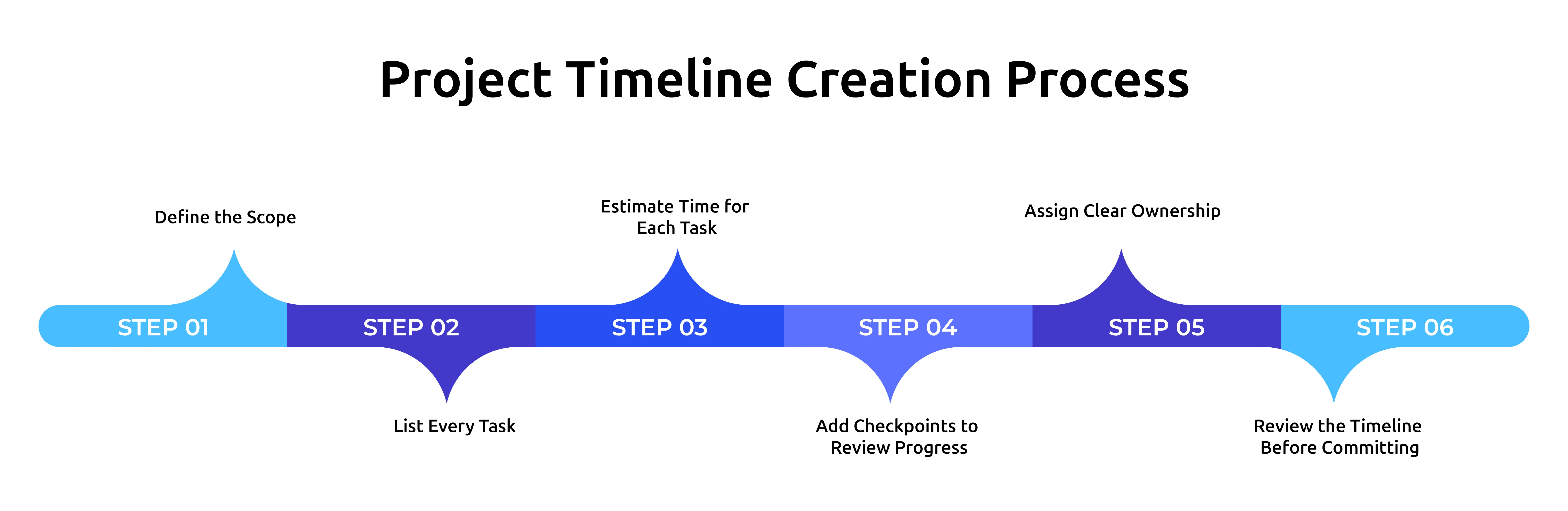
Step 1: Define the Scope Before Anything Else
Start by clearly outlining what the project includes and where it ends. Scope sets boundaries and prevents timelines from stretching due to unplanned additions or shifting expectations. Knowing the expected outcome, required work, available resources, and key constraints helps you build a timeline that stays focused and stable throughout the project.
Step 2: List Every Task Involved
Once the scope is clear, write down all the tasks needed to complete the project. Include preparation, coordination, reviews, and follow-ups that teams often miss. At this stage, focus on completeness rather than sequence. Breaking large tasks into smaller steps ensures your timeline reflects real effort, not assumptions.
Step 3: Estimate Time for Each Task
Assign realistic time estimates to every task before setting dates. This helps prevent rushed schedules and makes planning more accurate. Estimating time for each task also helps you see where work actually takes place and which activities may need extra attention during execution.
Step 4: Add Checkpoints to Review Progress
A timeline should include moments to pause and assess progress. These checkpoints help you confirm direction and address issues early. Regular review points keep the timeline flexible and allow adjustments without disrupting the entire plan.
Step 5: Assign Clear Ownership
Each task should have one clear owner responsible for moving it forward. This avoids confusion and reduces delays caused by unclear responsibility. Clear ownership keeps work moving steadily and ensures accountability without constant follow-ups.
Step 6: Review the Timeline Before Committing
Before execution begins, review the timeline from start to finish. Look for missing tasks, unrealistic overlaps, or tight deadlines. A final review ensures the timeline reflects how work will actually progress, giving you confidence before the project starts.
Ready to turn your project outline into a clear, actionable timeline?
Let Time Champ help you structure your plan and stay organized from the very first step.
How to Manage a Project Timeline?
Managing a project timeline doesn’t stop once planning is complete. As work progresses, conditions change, and new challenges appear. Staying in control requires regular attention and clear decision-making. Here are the key practices that help you manage a project timeline effectively as the work moves forward.
1. Track Progress Against the Plan
Once execution starts, regularly compare actual progress with the plan. This helps you to identify early signs of delay rather than finding them when it is too late. The goal isn’t to scrutinise every task, but to understand whether work is moving as expected and where you need to focus attention.
2. Watch for Dependencies and Bottlenecks
Some tasks affect many others. When one of these slows down, the impact spreads quickly. Paying close attention to dependencies helps you step in before delays ripple through the rest of the timeline. This is where proactive management saves time and effort.
3. Adjust Timelines When Reality Changes
No project runs exactly as planned. When timelines need to change, update them clearly and deliberately. It is much easier to deal with minor changes made at the beginning than with the last-minute ones that are done under pressure. A flexible schedule allows you to continue with the task without losing the framework.
4. Communicate Changes Clearly
Any update to the timeline should be shared with the right people at the right time. Clear communication prevents confusion and helps everyone reset expectations quickly. When teams know what’s changed and why, alignment stays intact.
5. Review the Timeline Regularly
A timeline should be revisited often, not only when something goes wrong. Regular reviews help you stay ahead of issues, refine estimates, and keep the plan relevant as work progresses.
Managing a timeline project is an ongoing responsibility, not a one-time task. When the scope is clear, work is structured, progress is tracked, and communication stays open, timelines become a tool for confidence rather than stress. This disciplined approach is what consistently turns plans into successful outcomes.
How to Optimize a Project Timeline?
Optimising a project timeline is about making an already working plan better. This step goes beyond creating and managing schedules. It focuses on removing friction, improving flow, and helping work move faster without adding pressure or cutting corners. Here are practical ways to refine a project timeline so it stays efficient and resilient.
1. Reduce Unnecessary Task Dependencies
Tasks often become linked over time without a real need. Reviewing these links helps you identify work that can move on its own. The fewer tasks that rely on each other, the less likely a delay in one is to slow down the rest of the project.
2. Balance Workloads Across the Timeline
Timelines often fail when teams take on too much work at once. Spreading tasks more evenly prevents rushed execution and keeps teams focused. A balanced workload supports steady progress instead of last-minute pressure.
3. Minimize Gaps Between Task Handoffs
Delays often occur after a team finishes one task and before the next one begins. Unclear responsibilities or not sharing required details on time usually cause this. Clearly defining handoffs and sharing information promptly reduces waiting, helps the next task start sooner, and keeps work moving without unnecessary breaks.
4. Add Flexibility Where Risk is Highest
Certain parts of a timeline are more likely to face changes or delays. Allowing extra time in these areas helps you handle issues without affecting the rest of the schedule. This keeps the timeline steady, even when things don’t go as planned. Optimising a project timeline is a continuous effort. Even minor, properly planned changes can help the workflow run better and enable teams to deliver projects with confidence.
How Does a Project Timeline Work?
A project timeline works by turning a plan into a clear visual path that shows how work moves over time. Instead of managing tasks in isolation, you see how everything connects, when work starts, how long it runs, and what comes next. This clarity helps you understand the full picture of the project at a glance, rather than relying on scattered updates or assumptions.
Project timelines bring structure to execution. You place each task on a time scale, making dependencies visible and priorities easier to manage. When one activity shifts, you can immediately see how it affects other parts of the project. This will enable you to make wise decisions at an early stage before minor changes escalate into risks during delivery.
Project management timelines also act as a shared reference point for everyone involved. Teams have an understanding of what they are doing currently, what happens afterwards and how their work fits into the overall plan. This shared visibility reduces confusion, limits unnecessary follow-ups, and keeps efforts aligned toward the same goal.
Most importantly, timelines help you stay in control as work progresses. They are not static charts but living plans that evolve with the project. Regular checks and updates of the project will help you to react gently to the changes, keep expectations at a manageable level, and lead the project with assurance instead of making constant adjustments.
Finding it hard to keep projects organized as work evolves?
Use Time Champ to bring structure to tasks and stay on top of progress.
What Are the Benefits of a Project Management Timeline?
Managing projects without a clear structure can quickly lead to missed deadlines, misaligned priorities, and last-minute pressure. According to the Project Management Statistics Report, only 31% of projects are successful on time, within budget, and within scope. A well-planned project management timeline helps teams stay organized, aligned, and focused on what needs to happen next. Below are some of the key benefits of using a timeline to manage projects more effectively.
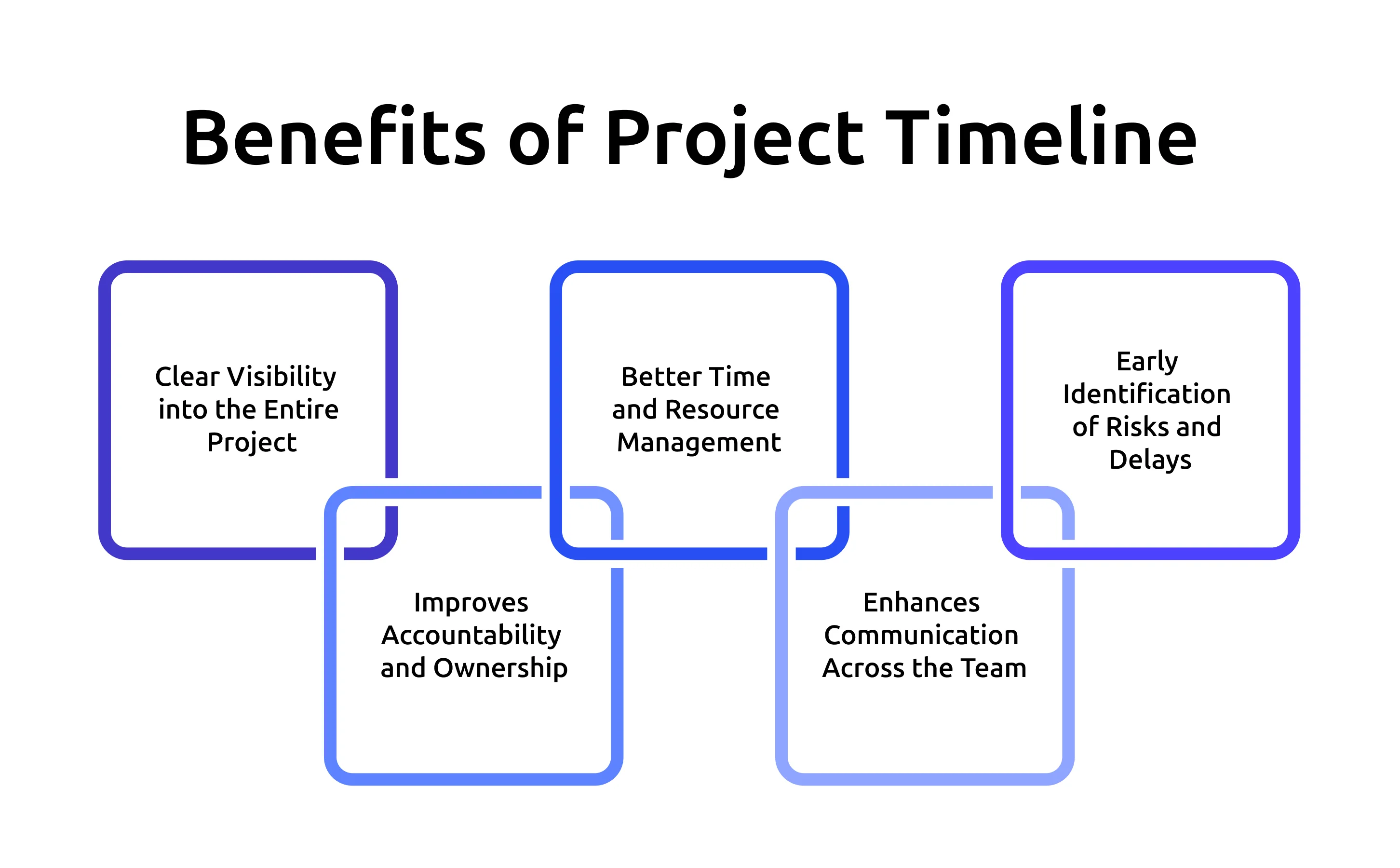
1. Clear Visibility into the Entire Project
A timeline gives everyone involved a clear view of the project from start to finish. Instead of juggling scattered notes or relying on verbal updates, team members can easily see the current status and what comes next. This level of transparency reduces confusion and simplifies progress tracking. With a visual layout, the team can quickly identify potential bottlenecks and adjust before small issues turn into major delays.
2. Improves Accountability and Ownership
When you map out tasks with clear deadlines, each team member understands their responsibilities and when they need to complete their work. It promotes ownership since people simply recognize how their work contributes to the overall goal. Engaged teams take the initiative, which reduces the chance of missing a deadline or forgetting a task.
3. Better Time and Resource Management
Project timeline assists you in distributing resources like time, tools or manpower in a more effective way. Understanding the sequence of tasks helps you avoid overwhelming the team during peak periods or leaving resources unused during slower phases. It also minimises last‑minute scrambles because you can plan ahead and stay prepared for what’s coming.
4. Enhances Communication Across the Team
Project management timelines improve communication by giving everyone a shared reference point. Instead of relying on frequent sync‑ups or long email threads, team members can simply check the timeline to stay updated. This reduces misunderstandings and keeps the team aligned, especially when working in hybrid or remote environments. A clear timeline helps other stakeholders who aren’t involved in daily tasks to understand progress without needing frequent check-ins.
5. Early Identification of Risks and Delays
Identifying issues early on is one of the major benefits of using a project timeline. Any delay in a critical task becomes immediately visible because the timeline shows all tasks and their dependencies. You can alter the schedule, reassign work or notify others prior to the problem escalating. Catching issues early helps the project run more smoothly and avoids last-minute surprises.
How Can Workforce Intelligence Strengthen Project Timelines?
A project timeline becomes more reliable when it reflects real insight into how people and resources work. This is where Time Champ connects naturally to timeline planning. You can see the progress of any project and task, and the areas where work is going as planned and where it is slowing down. With this clarity, you shape timelines around actual capacity rather than rough estimates, making resource allocation more balanced and realistic from the start.
These insights also support stronger financial control throughout the project. When you can clearly track how team members spend their time across tasks and phases, it becomes easier to compare effort against budgets and spot inefficiencies early on. This lets you fine‑tune workloads, prevent overspending, and keep the project on track without last‑minute adjustments. Instead of reacting to issues after they affect deadlines or costs, you guide the entire timeline with a clear understanding of how your team works and how your team uses resources.
Conclusion
A strong project timeline gives you more than structure. It gives you direction and control as you move through each stage of work. When you plan with intention and stay flexible as things change, you create space for clarity, steady progress, and stronger collaboration across teams.
A workforce intelligence tool like Time Champ shows you how teams spend time, complete tasks, and use resources in real work situations. This clarity helps you make informed adjustments, keep project timelines realistic, and guide work toward meaningful outcomes without unnecessary pressure.
Looking to bring more control and focus to your project workflow?
Try Time Champ to organize your efforts with clarity and keep your work moving smoothly.

Thasleem Shaik

Table of Content
-
 What Is a Project Timeline?
-
What Are the Key Components of a Project Timeline?
-
What Are the Examples of a Project Timeline?
-
How to Create a Project Timeline?
-
How to Manage a Project Timeline?
-
How to Optimize a Project Timeline?
-
How Does a Project Timeline Work?
-
What Are the Benefits of a Project Management Timeline?
-
How Can Workforce Intelligence Strengthen Project Timelines?
-
Conclusion
Related Blogs
Download 7 free project timeline templates in Excel, Word & PDF to plan, organize, and track projects efficiently, ensuring your team stays on schedule.
Guna Lakshmi | November 07, 2025
Explore 7 free project planning templates to plan, schedule, and manage projects effectively. Download in Excel, Word & PDF and boost your project success.
Chetana Choudary | November 11, 2025
Learn to create and leverage SMART goals effectively in project management for better planning, execution, and success. Get expert insights now!
Mounika Sai | December 6, 2023
Familiarize yourself with the basics of Project Cost Management, including budgeting, and estimating the costs. Make sure that your projects are profitable.
Jahnavi Pulluri | May 21, 2024
Enhance employees productivity with project management software and generate profits that makes your company stay ahead of competitors.
Mounika Sai | August 29, 2023
Access free downloadable Project Estimate Templates in Excel, Word, and PDF to plan costs, track budgets, and create accurate project estimates easily.
Thasleem Shaik | November 03, 2025


 4.7/5 avg.
Ready to Manage Your Workforce Smarter?
Join our family of 1100+ companies using smart insights to redefine workforces!

Free Trial
No Credit Card Required